Ampeg SVT Classic — Screen Resistor Failure & Full Retube
2026-03-30 • Fixed
Device: Ampeg SVT Classic Bass Head
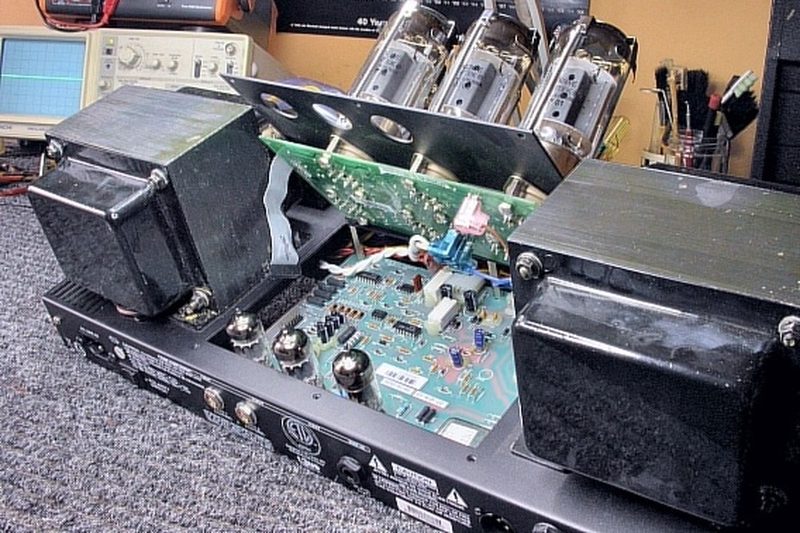
Symptom
Screen resistor failures — likely triggered by a shorted or failing output tube. Burnt smell, possible loss of output. Some resistors visually burned or cracked, others stressed but not yet failed.
Diagnosis
Visual inspection confirmed burned and out-of-spec screen resistors on the main PCB near the output tube sockets. The SVT Classic runs six 6550 output tubes at B+ voltages in excess of 500V DC — screen resistor failure is one of the most common service issues on this platform. Best practice is to replace the full set rather than individual failed units, as surviving resistors under the same stress will fail shortly after. Sockets and associated PCB traces inspected for heat damage and corrosion.
Fix
Replaced all 12 screen resistors with 470Ω 5W wirewound units (one per tube position), ensuring physical clearance from the board surface for heat dissipation. Installed a matched set of six Sovtek 6550WXT+ output tubes. Powered up slowly, allowed a 15-minute warm-up, then set bias using a bias probe at each tube socket. Target: 28–32mA per tube idle current. Confirmed all six tubes within a few milliamps of each other given the matched set. Re-verified bias after 10 minutes under load — stable throughout. Reconnected an 8Ω speaker cab, applied input signal, confirmed clean output across full range with no hum, noise, or oscillation.
What I Took Away
Always replace screen resistors as a full set — the ones that haven't failed yet are already stressed. The SVT Classic is hard on output tubes. Keeping bias conservatively set and using quality matched tubes extends service intervals significantly. If screen resistor failures are recurring, check for underlying issues: marginal B+ voltage, loose sockets, or early tube failure. Recommend retube and rebias every 1,000–2,000 hours of heavy use. Documented final bias readings per tube position for service history.
Same Problem?
Get Your Gear Diagnosed
Every repair on this site was diagnosed and documented on a real bench in Indianapolis. If your gear is doing something similar, send it over and I'll find out why.